From Major Transactions, Landmark Offices and Rental Housing to the Volvo Gigafactory
04. 11. 2026
Grinity, a consultancy company in construction and real estate, has another successful year behind it. One of the CEE leaders in Project and Cost Management, Advisory & Transactional Services and advisory in Sustainability, ESG and Building Energy Optimization recorded nearly 450 completed and ongoing projects over the past year. Grinity’s success is reflected in a consistently high volume of work in the Czech Republic, Slovakia and other European countries, as well as in the expanding range of services the company provides to leading domestic and international developers, investors and financial institutions such as Passerinvest Group, Generali Real Estate, WOOD & Company, Penta Real Estate, Panattoni, Trinity Bank, AFI, Garbe, 7R, ZDR Investments, RSJ Investments, Investika, IAD Investments, Mint Investments, Kooperativa and many others.
Grinity’s portfolio includes the largest investment transactions in the country, among them the acquisition of the Riverside portfolio of five office buildings on Rohan Island, which is currently being completed, the purchase of the Port7 complex in Prague 7 – Holešovice, as well as acquisitions of numerous retail and residential properties and increasingly popular senior care homes and specialized care facilities. Among the new developments, notable projects include Project Management of the mixed-use landmarks Hila and Orion at Prague’s Brumlovka, Sequoia in the emerging Nové Roztyly district, office buildings in Pankrác and Karlín, as well as a range of industrial and logistics facilities, headed by the state-of-the-art Volvo car plant, one of the largest foreign direct investments in Slovakia in recent years. We spoke with Zdeněk Trejbal, Managing Director, and Pavel Čermák, CEO Grinity, about current projects, new services and future strategy.
We are meeting again at the company’s Prague headquarters in Bredovský dvůr in the city center after almost two years. For the Czech market, the past months have meant a continuation of the investment and construction boom. How do you see this period from Grinity’s perspective?
PČ: The last two years have been among the best in Grinity’s history. Central bankers already cut euro interest rates last year, which led to a significant revival of the domestic investment, real estate and construction markets. Developers and investors are launching new projects, and Czech income-producing real estate attracted record investment last year. This recovery has also had a positive impact on Grinity’s results. Over the past year, we recorded a total of 448 completed and ongoing projects, and we are performing well across market segments: from our Commercial Developers team, which handles projects across all sectors on real estate market, through Advisory & Transactional Services team, Building Energy Optimization department, to our Sustainability team, newly led by Branislav Hudymač.
ZT: Our ambition is to continue steady organic growth built on quality, the professional expertise of our people, a broad portfolio of services and know-how backed by more than 25 years of experience in domestic and international markets. Beyond our standard services, we continue to see strong demand for services related to reducing the energy intensity of buildings, energy simulation models and Energy Performance Certificates (PENB).
You mention nearly 450 completed and ongoing projects. That is a huge number. What do you attribute this success to?
PČ: Our strategy relies above all on close cooperation and effective synergy between our teams, which comprise more than 130 experts in the Czech Republic and Slovakia – project and cost managers, engineers and specialists in all technical and construction disciplines. Under one roof, clients receive a comprehensive package of services that they would otherwise have to put together from perhaps three or four different external companies.
Can you give us a specific example of such multidisciplinary cooperation?
PČ: Certainly. A great example is the wide range of services we provide for the investment group WOOD & Company. This investor is active in several segments and countries simultaneously. For this client, we provide Technical Due Diligence for acquisitions, Energy Optimization of properties, Environmental and ESG Advisory, as well as Project Management for property modernization. We provide these services for a significant part of its real estate portfolio, which today comprises several dozen properties, including the Harfa shopping center in Prague, the Green Point office building in Anděl, the Green Line and Hadovka Office Park complexes and, in Slovakia, Bratislava Business Center, Lakeside Park, Polus Office Center, the Vivo shopping center in Bratislava and others.
Another major client in the Czech Republic is Mint Investments, with which we have carried out several interesting transactions while also supporting the company in optimizing buildings in its portfolio and setting up ESG strategies. Last year, Mint also completed the large-scale residential project Metropolis in downtown Bratislava, where Grinity acted as Project and Cost Manager, and we followed up on this cooperation with an entirely new service – Property Management of almost three hundred apartments. Mint was therefore also one of our largest clients in Slovakia last year.
Let’s turn to investment. Grinity has traditionally been a leading player in Advisory & Transactional Services on the investment market, which has seen record volumes over the last two years. How has your team performed?
PČ: The results of our Advisory & Transactional Services team mirror the upward trend of the entire investment market, and we are pleased to be seen as a leading consultant in this sector. If we look at the key transactions, Grinity was involved in a large share of them. One example is the completed acquisition of the premium office complex Port7 in Prague 7 – Holešovice, where we provided Technical Due Diligence for the buyer, AFI Czech Republic. Probably the most significant portfolio transaction of 2026 is the currently closing sale of five office buildings – Danube House, Nile House, Amazon Court, Missouri Park and Mississippi House on Rohan Island – where Grinity represented the buyer, Trinity Bank, on the technical side. Following last year’s sale of Palladium, this is clearly the largest office acquisition in the Czech Republic in recent years. It also demonstrates the growing strength of domestic capital, which is behind even the largest transactions.
ZT: Another important trend we are seeing on the investment market is the growing popularity of investment in specific asset types, such as senior care homes and specialized care facilities. One of the most active investors in this segment is Penta Hospitals, with which we have carried out several waves of these portfolio transactions over the past and current year, significantly strengthening its existing real estate portfolio. For Grinity, this meant carrying out a detailed, in-depth audit of the entire portfolio of these assets within a relatively short time, followed by several more waves of similarly extensive Penta acquisitions across the Czech Republic. Over the last three years, we have worked for several clients in this sector and have completed more than 50 projects of this type.
PČ: Recently closed transactions worth mentioning include the sale of the Prague office property Pankrác House, again acquired by Trinity Bank, Polygon House, where we represented the buyer, DRFG group, in the due diligence, and Butovice Offices, where we worked for Investika. Among the Slovak transactions Grinity was involved in, I would highlight the acquisition of the Bory Mall shopping center in Bratislava, one of the largest deals in Slovakia last year. We also provided advisory services on new additions to the IAD Investments portfolio. And we supported investor ZDR Investments in several retail transactions in neighboring Austria, which illustrates the international reach of our services into other Central European countries.
How has your Commercial Developers team, which focuses, among other sectors, on office and residential construction, performed? The office market seems to have noticeably come back to life – is that right?
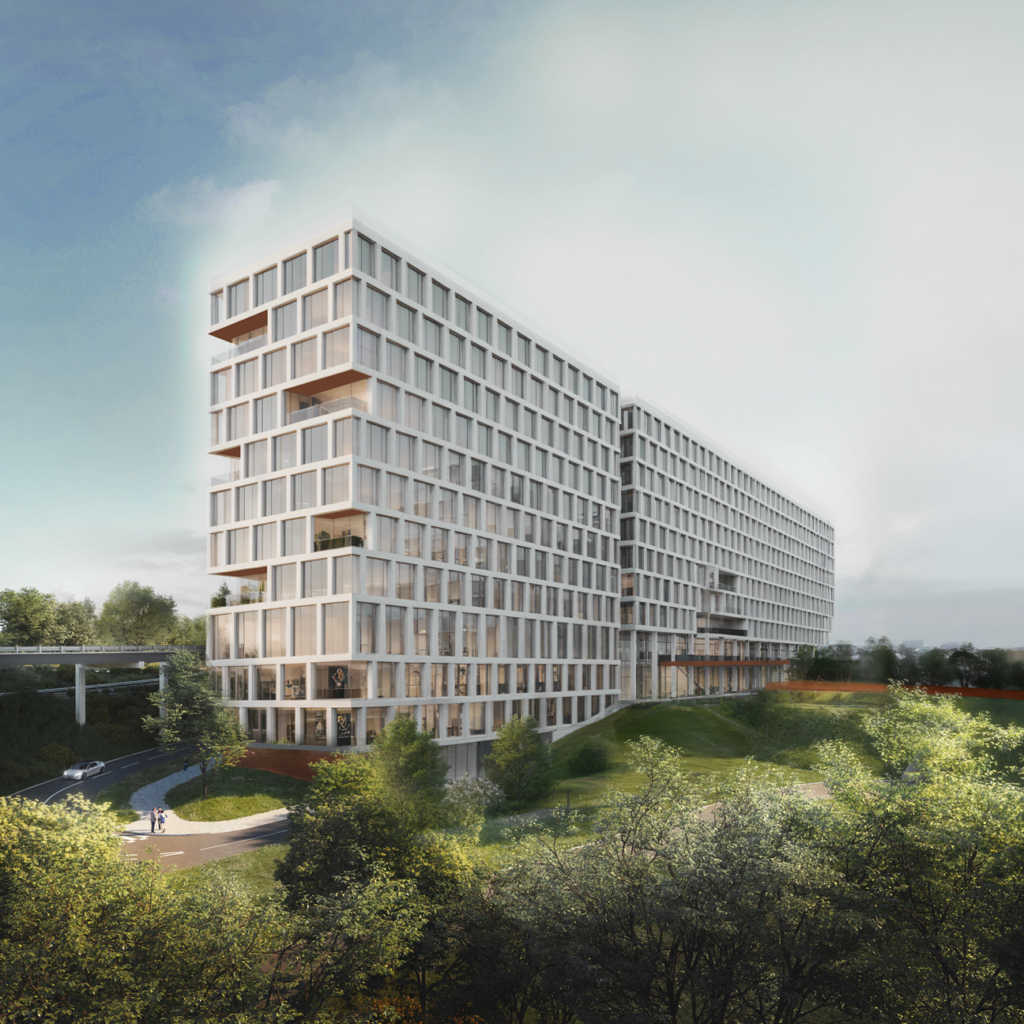
ZT: That’s right. In terms of the volume of our projects, office development has indeed revived, and Passerinvest Group is undoubtedly one of the key players that were first to get it moving again. Passerinvest is currently developing three major projects in Prague: the Hila and Orion buildings, which combine modern offices with rental apartments and will become distinctive architectural features of the Brumlovka district in Prague 4 – Michle, and the Sequoia building, which will be the landmark of the emerging Nové Roztyly district. We appreciate the investor’s courage to build such a strong portfolio, which it plans to develop further in the coming years.
Grinity acts as Project Manager on these projects and also provides Cost Management, Quality Control and, on the Sequoia project, Sustainability advisory. Compared with buildings of previous generations, these buildings offer top-class parameters and include solutions such as heat pumps, geothermal boreholes, photovoltaic panels and radiant ceiling heating and cooling systems. For the Sequoia building, where we are also responsible for certification, we are targeting the highest possible rating, BREEAM Outstanding. In Nové Roztyly, this is our second joint project, following the completed Roztyly Plaza building, which has won a number of awards. We have been working for Passerinvest since 2001, and this year we are celebrating 25 years of successful cooperation.
PČ: Another major investor with whom we have a long-standing relationship is Generali Real Estate, with which we are currently preparing or building three large projects in Prague – two office buildings and one hotel. We would also like to mention another of our clients – Kooperativa, with which we are preparing both office and residential developments; in the Czech Republic, the company is particularly active in the rental and affordable housing segment, as it is in its parent city of Vienna.
Rental and affordable housing is a topic that is resonating increasingly on the market. What role does it play in your strategy and current activities?
ZT: In addition to commercial projects, where Grinity is one of the leaders, we want to focus more on residential projects in the future, specifically on rental and affordable housing. We have already established ourselves in this segment through transaction advisory for institutional investors who build and acquire large residential rental portfolios. Last year we successfully completed two projects – Prosek Park and City Opatov II. In the first case, our client was Dostupné bydlení České spořitelny, and in the second, the same investor together with Kooperativa insurance company.
In total, these comprised more than 550 rental apartments, where Grinity’s role, in addition to Technical Advisory during acquisition, was to provide Technical Monitoring on behalf of the investor during construction, which included a complete handover inspection of all completed apartments.
Grinity also provides so-called Contract Advisory for investors. Can you tell us what this service involves?
ZT: Acquisition contracts usually consist of three parts – legal, economic and technical, where it is important to ensure that the technical standards of the property being purchased are set correctly, together with procedures for quality control and acceptance of the completed works, as well as the method of punch list items. We incorporate all these documents into the acquisition contracts and then check their fulfilment during construction. Signing the contract is followed by the Technical Monitoring phase, i.e. regular inspections throughout construction, culminating in a final Technical Due Diligence of the property, including the settlement and resolution of defects and punch list items. Only then is the entire investment transaction finally completed. And this is precisely where we see further growth potential, because the number of residential rental projects owned or developed by institutional investors, for example, will undoubtedly increase in the Czech Republic and Slovakia in the coming years.
How do modern technologies help you manage construction, whether of commercial, mixed-use or residential projects?
ZT: Very significantly. Digitalization is now synonymous with modern construction. A large share of projects today use tools such as CDE – Common Data Environment, i.e. an environment with a 3D digital model and a shared digital interface where all approval processes take place. In digitalization, Grinity works with Plan Radar and uses a range of smart digital tools that make individual management processes transparent and at the same time considerably more efficient. Our clients can, for example, walk through the entire construction site in real time in a digital environment without being physically present in the Czech Republic.
What other trends do you see shaping the construction and real estate market today?
PČ: One of the challenges for the entire real estate market is the growing emphasis on sustainable construction and operation of properties throughout their entire life cycle, in response to increasingly strict European Union regulations on the environmental impact of buildings. Companies are therefore reassessing their strategies, and in addition to LEED, BREEAM and WELL certifications, which are an integral part of new buildings, we are increasingly seeing demand for services such as embodied carbon calculations, analysis of the CO₂ content of materials used, construction waste management and reuse, pre-demolition audits, etc. There is also continued strong interest in energy performance calculations for properties, including energy simulation modeling, preparation of Energy Performance Certificates, as well as setting up ESG strategies, climate risk assessments and setting up all processes so that projects meet the criteria of the EU Taxonomy.
This is probably also related to the growing interest in the Energy Optimization of existing buildings you mentioned earlier…
ZT: Exactly. Today we provide Building Energy Optimization to investors for individual properties, but increasingly also for entire real estate portfolios. We approach each building individually: for most buildings, the basic element is operational optimization. This has an almost immediate effect, with payback within a few months. For some buildings, the proposed measures involve technology upgrades, while for others structural modifications or major renovation may be necessary. Based on an initial audit, we always propose possible measures in several variants, including a cost estimate and an assessment of the economic payback. In agreement with the client, we then also implement them through our team. This is another area where investors benefit from the synergies of several of our teams: Building Energy Optimization, Sustainability and Commercial Developers.
PČ: It is also important to realize that almost half of the current office stock today consists of buildings that are more than 20–25 years old. If they are to remain competitive on the market in the future, they will have to undergo – or are already undergoing – more or less extensive renovation. After a quarter of a century dominated by new construction, we are moving into a phase of large-scale renewal of these existing properties, which is both a challenge and a huge opportunity for the entire real estate and construction sector.
Is the pressure for sustainable construction and operation also reflected in residential development?
ZT: Yes, it is no longer unusual for us to certify residential projects as well. Completed examples include the Arcus City complex in Prague’s Stodůlky and Astrid Garden in Prague 7 – Holešovice.
There are currently leadership changes in Grinity’s Sustainability sector. What is changing?
PČ: Since mid-September 2026, Branislav Hudymač, who brings many years of experience across fields related to building sustainability, has been the new Sector Leader Sustainability. During his eight years at Grinity, he has applied his expertise on numerous domestic and international projects. He is a professional who has “grown up” with us. His taking over the leadership of the existing team is a managed transition fully in line with our vision for the further development of our Sustainability services. Lenka Matějíčková, who led the Sustainability team, and Petr Schorsch, who led the LEED & Energy area, will conclude their employment with Grinity on December 31, 2026. We sincerely thank them both for their many years of collaboration and for everything they have contributed to the development of the entire field and to establishing Grinity as one of the leading consultancies in Sustainability as well.
Let’s now focus on the industrial market, where Grinity is again a significant player. Can you remind us of some of the projects you are currently working on?
PČ: Among new projects, Grinity is involved in the delivery of industrial and logistics parks for clients such as Panattoni, Garbe, 7R and UDI, among others. From the Panattoni portfolio, one example is the Kladno industrial park, which is being created through the transformation of a former unused brownfield site. In cooperation with the developer 7R, an interesting project is the industrial park in Lužec. With Garbe, we have several successful projects behind us, including two phases in Jirkov in the Chomutov region, an extensive industrial park in České Budějovice, which will comprise several phases, and last but not least Garbe Park in Klášterec nad Ohří. We are also very active in Slovakia, where Grinity is the market leader, particularly in the automotive industry, the flagship of the Slovak economy.
Your industrial portfolio includes projects for global giants such as Jaguar Land Rover and Volvo Car Corporation. Volvo’s new electric vehicle plant, built on a 280-hectare site in a strategic industrial zone near the village of Valaliky close to Košice, is one of the largest foreign direct investments of the past decade. How far is the project today?
PČ: The Volvo plant, representing an investment of €1.2 billion, started its first shift on September 21, 2026, and at the same time celebrated reaching 1,000 employees. Among the completed buildings, notable examples include the Body Shop, where 660 robots are installed, and the Paint Shop, which features a special electric paint oven that will make operations more environmentally friendly. The largest of the buildings is the assembly hall, with a floor area of 100,000 m². The planned capacity of the first phase is 250,000 vehicles per year.
Moreover, the commissioning of the Volvo plant is having a huge positive multiplier effect on the entire Eastern Slovakia region and its economy, whether in terms of new jobs or the development of infrastructure, services and residential construction for the employees of Volvo and its suppliers, whose plants will be built in the surrounding area.
What does such an exceptional project mean for you as Volvo’s technical consultant?
PČ: For Grinity, such a complex project was a unique opportunity to draw on all our long-standing know-how and turn it into an excellent result. It follows on from the construction of the Jaguar Land Rover plant in Nitra, which went into operation in 2017. The Košice electric vehicle plant is even larger and comprised several construction phases totalling hundreds of thousands of square meters. It is historically the largest plant of its kind in Slovakia and one of the largest in Central Europe.
As Volvo’s technical consultant, Grinity was responsible for the complete Project Management of the entire production plant, including Cost Management, Quality Management, Health & Safety Coordination, Scheduling Management and LEED and WELL certification. Our whole team particularly appreciated the professionalism, expertise and human approach of the client.
Grinity has multi-billion projects and more than 25 years of experience behind it, and next year it will celebrate its fifth anniversary under its new brand. Is there a goal you want to achieve in the future?
ZT: Our goal is to continue growing organically at a rate of 5–10 % per year and, above all, to keep investing in strengthening synergies between our teams, the quality of our services and the professional development of our people, who are the company’s main asset and driving force. We give young talent the opportunity to work their way up to senior positions, and from employees who have grown with the company, we develop managers who now help shape the company’s strategy and success alongside us. We are a company open to new ideas and initiatives, which do not get left on the shelf. As a team, we all pull in the same direction and clearly prefer quality over quantity – and that is our mission: to achieve truly sustainable development and defend our position as a respected leader in the field.